RikyukiMarch 22, 2026Nichiren Shu Beikoku Betsuin
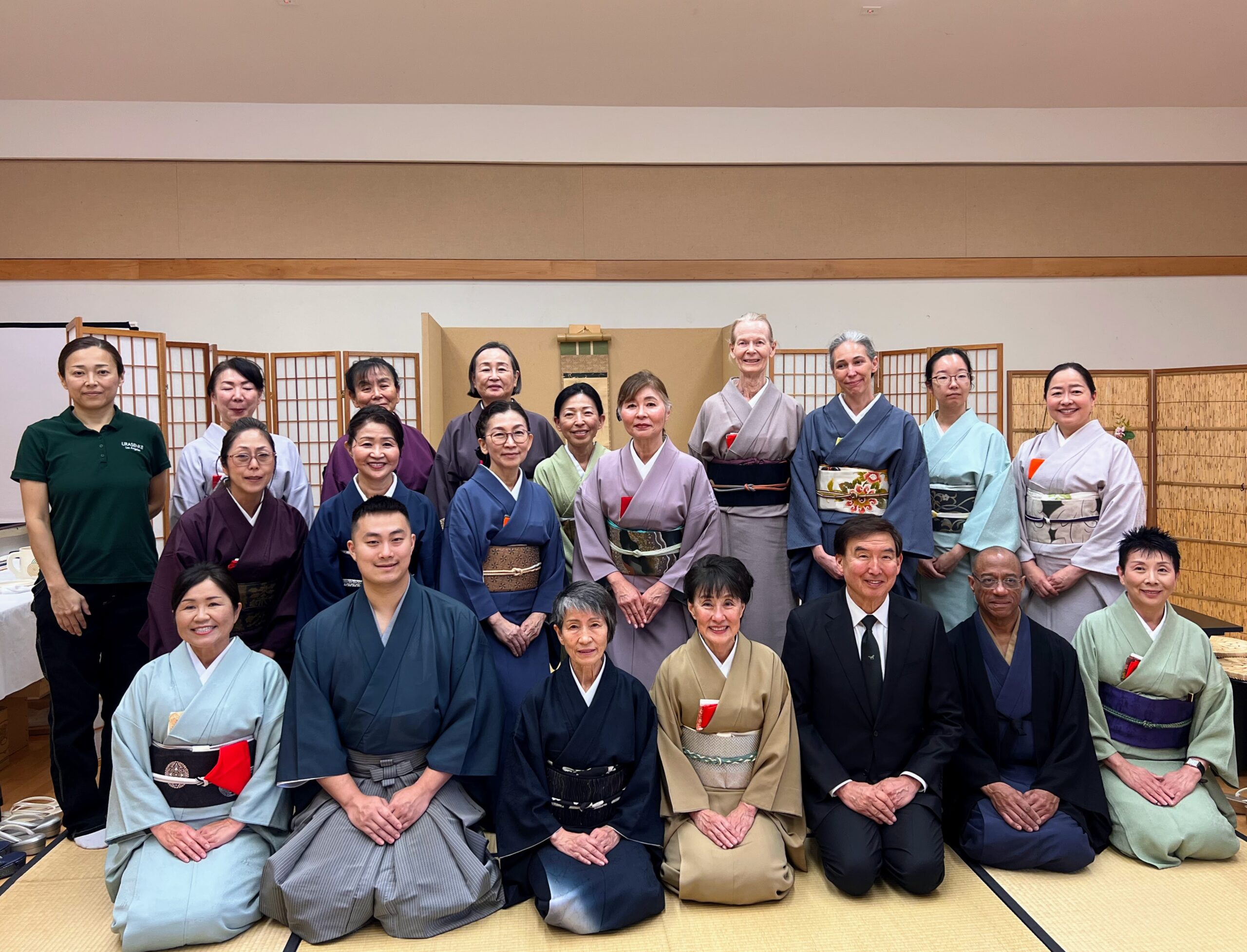
Held on an unseasonably warm March Sunday, chajin, students and friends from across Southern California commemorated the annual Rikyuki. It is a day that reflects on the life, influence and virtues of the life of Sen Rikyu (1522-1591). CoA Ann Abe welcomed the audience and thanked invited guests. Sixty-two guests attended, including special guest, Mr. Takayuki Sakai, the representative of Konnichikai.
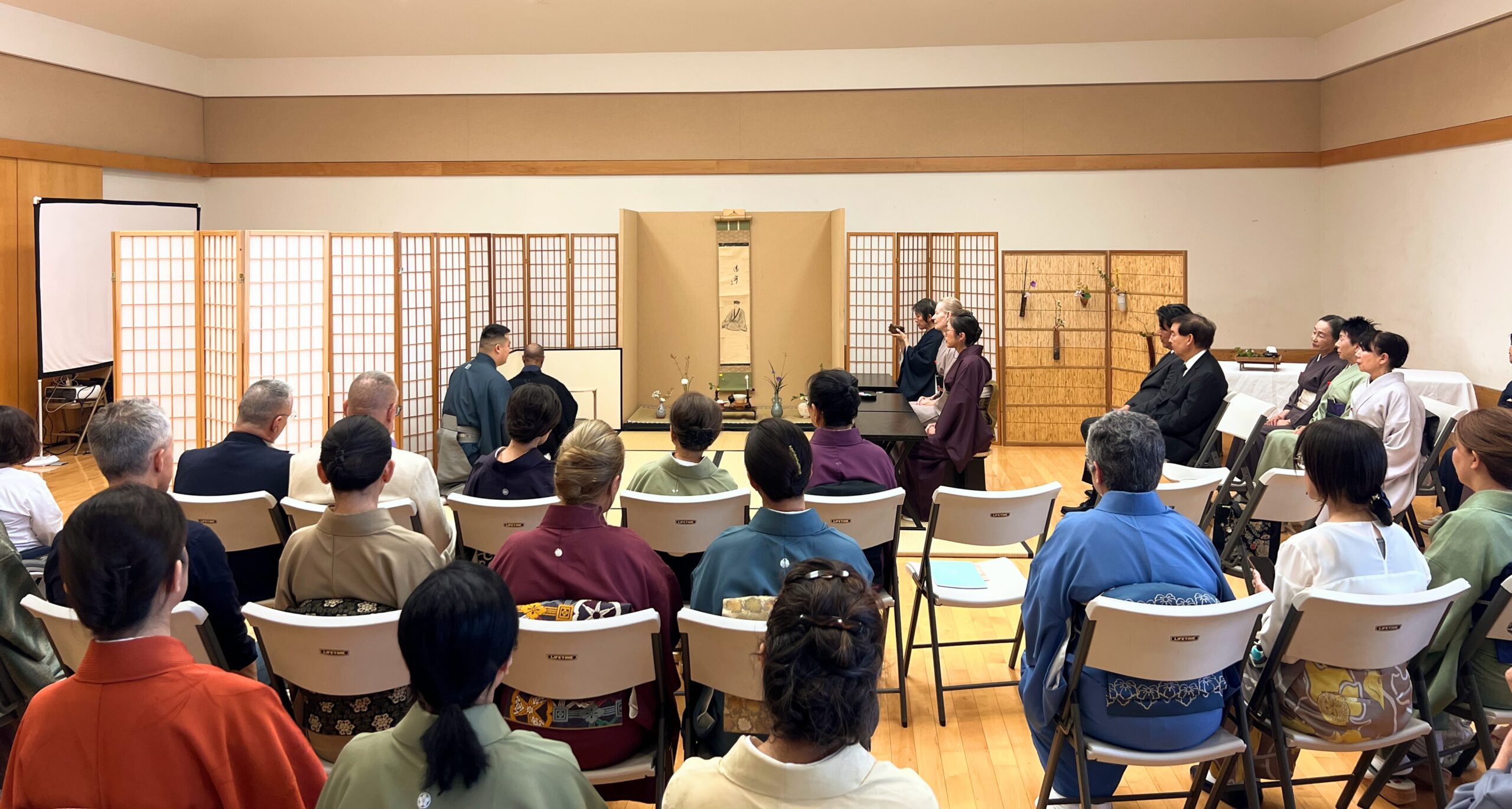
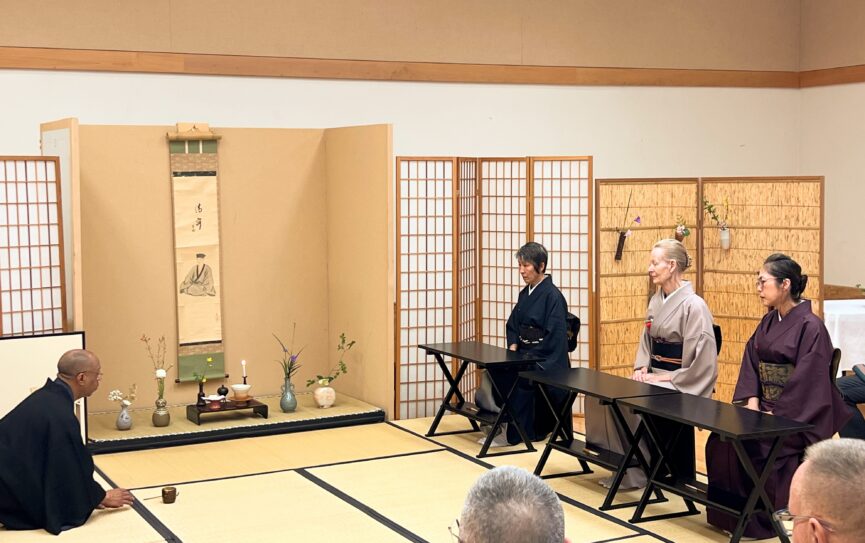
Every year, a shachu is invited to present the Kucha or ceremonial tea offering. This year the Zenshuji shachu carried out this solemn tribute to Rikyu. The host or teishu was Mr. Soyu Kennedy and the assistant or hanto was Mr. Tianhe Zhu. The first guest was Mme. Soshin Robinson, the second guest was Mme. Soka Becker, and the third guest was Mme. Sochi Ohshima. Managers and instructors were also invited to the Hanayose floral tributes to Rikyu-koji. Bright, seasonal flowers were arranged on hanging containers.
Sweets and tea were then served to all the guests. The sweets were Shigure by Fugetsudo which was a favorite of Sosei Matsumoto who started Urasenke in Los Angeles. On the Alcove or tokonoma hung an image of Rikyu-koji and signed by Tantansai with the characters Sei Jaku (Purity and Tranquility). A single candle was lit that symbolically led the way, welcoming Rikyu to the tea gathering.
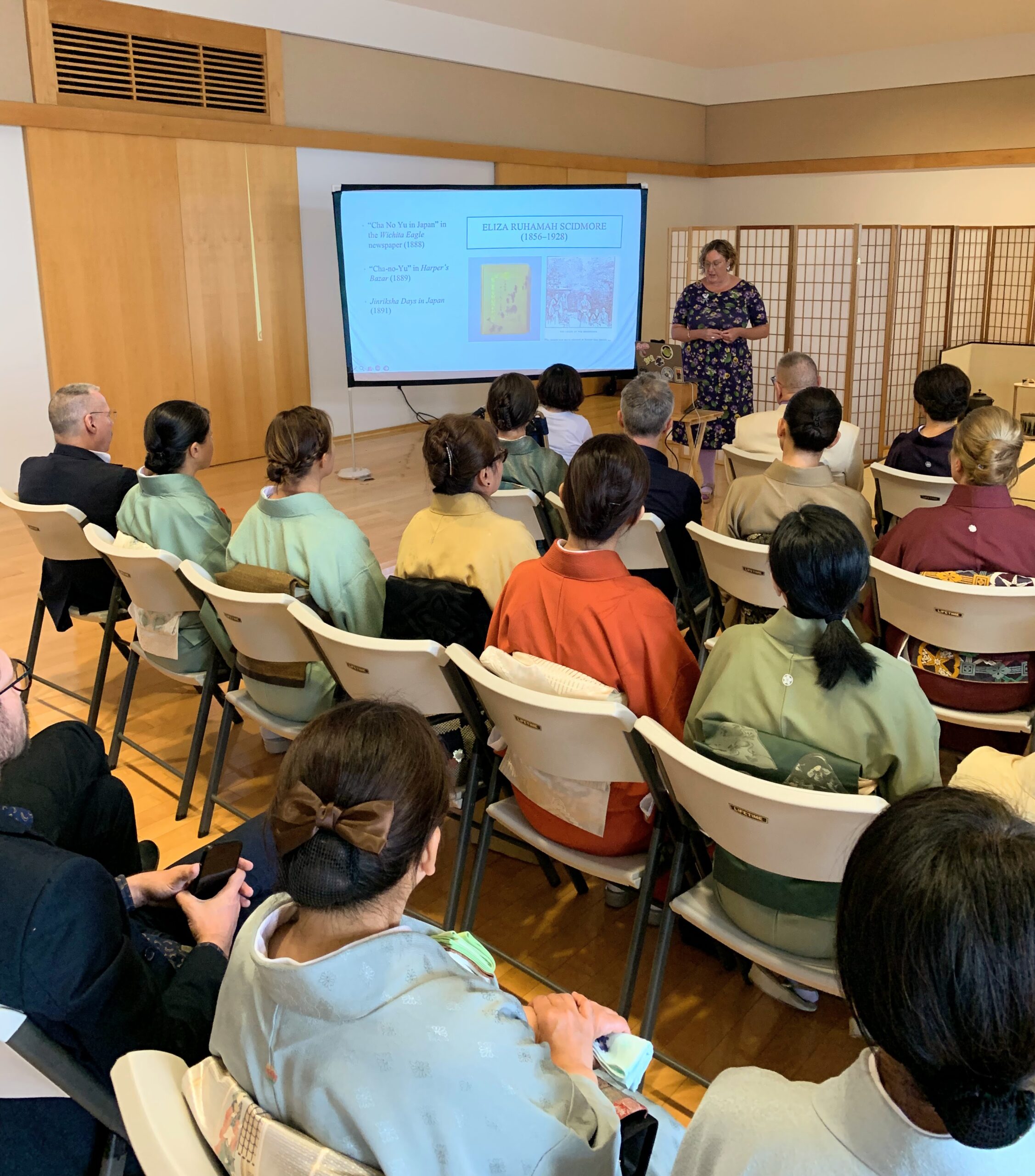
After the tea preparation, Dr. Rebecca Corbett gave a brief presentation of recent historical research on early non-Japanese tea practitioners, within and beyond Japan. The Japanese studies librarian at University of Southern California and a PhD holder in Japanese History from Sydney University (Australia), Dr. Corbett’s first book uncovered heretofore unnoted early histories of women tea practitioners in the Edo and Meiji period. At this event, she shared materials from new research on 19th and early 20th century encounters between non-Japanese people and matcha, especially tourist experiences (many of whom did not appreciate the flavor of koicha or usucha) and the first foreign chadō students, many of whom were wives and daughters of diplomats, foreign guest workers, and missionaries. In light of the current “matcha boom” around the world, it was especially enlightening to see both comical and sincere ways that matcha was first encountered by Westerners.